Moss and algae develop quickly on hardscaped surfaces throughout Vancouver because extended rainfall, shaded conditions, and moisture retention create ideal growing conditions for organic buildup. Patios, paving stones, retaining walls, walkways, and outdoor living spaces often remain damp for long periods during the year, especially in shaded or poorly drained areas.
Preventing moss and algae growth usually depends more on drainage performance, material selection, surface exposure, and maintenance consistency than surface cleaning alone. Vanskyline Construction designs hardscaping systems throughout Vancouver with long-term drainage performance, water runoff control, and surface durability in mind to help reduce recurring moisture-related buildup across outdoor surfaces.
Why Moss and Algae Form on Hardscaping in Vancouver
Vancouver’s climate creates frequent surface moisture throughout most of the year. Rainfall, organic debris, shade coverage, and limited airflow allow moisture to remain trapped against hardscaped surfaces for extended periods.
Moss usually develops more aggressively in shaded environments with consistent moisture retention. Algae often appear first as slippery surface discoloration in areas where water remains on the surface longer than intended.
Some patios develop buildup faster because of surrounding tree coverage, north-facing exposure, drainage limitations, runoff concentration, or low points that allow water to collect repeatedly near the surface.
Moisture retention around joints, retaining wall edges, stairs, and patio transitions also increases the likelihood of organic growth over time. Surfaces that dry slowly after rainfall usually experience more recurring buildup than areas with consistent sun exposure and airflow.
Organic buildup may begin as surface discoloration, but recurring moisture retention can eventually affect joint stability, drainage performance, and long-term surface condition if ignored for extended periods.
Hardscaping Materials That Resist Moss Growth
Material selection affects how much moisture remains trapped on the surface and how easily organic buildup develops over time. Surface texture, porosity, joint construction, and drainage integration all influence long-term maintenance requirements.
Paving Stones vs Poured Concrete
Paving stones usually manage moisture movement more effectively than large poured concrete sections because properly installed paver systems allow controlled drainage movement between joints and beneath the surface.
Large concrete slabs often hold standing water longer when grading or runoff direction becomes inconsistent. Cracking can also create moisture retention points where algae buildup develops more easily over time.
Individual paving stones also allow isolated maintenance or replacement when localized movement or drainage issues appear. Concrete repairs often require larger surface correction once moisture-related deterioration develops.
Natural stone and textured pavers may retain more surface moisture depending on porosity and finish selection. Dense, smoother materials usually dry faster after rainfall than heavily textured or porous surfaces.
Surface Finishes and Texture Differences
Surface texture directly affects how much water remains trapped after rainfall. Rough finishes, deep texture profiles, and heavily porous materials often retain moisture longer than smoother surfaces.
Textured surfaces can still perform well in Vancouver’s climate when drainage, grading, and sun exposure remain properly controlled. Material performance depends on the complete hardscape system rather than texture alone.
Darker surfaces positioned beneath tree coverage or limited sunlight may also dry more slowly because reduced UV exposure limits evaporation throughout wet seasons.
Joint Materials That Reduce Moisture Retention
Joint construction affects drainage movement, surface stability, and organic buildup between paving stones. Loose or deteriorating joints retain moisture more easily while also trapping organic debris that supports moss growth.
Polymeric sand often reduces moisture retention and organic intrusion more effectively than traditional loose joint sand because the material hardens after activation and creates greater resistance to washout and surface gaps.
Joint stability also depends on proper installation depth, compaction, drainage design, and long-term maintenance. Repeated joint erosion often indicates larger water movement issues beneath the surface.
 Design Decisions That Prevent Moss and Algae
Long-term moss prevention usually begins during the design and installation phase rather than after buildup appears. Drainage planning, slope management, airflow, and surface exposure all affect how quickly hardscaped areas dry after rainfall.
Improving Sun Exposure and Air Circulation
Hardscaped surfaces positioned beneath dense tree coverage or enclosed spaces usually remain damp longer throughout Vancouver’s wet seasons. Limited airflow slows evaporation and increases surface moisture retention after rainfall.
Patio layouts, retaining wall placement, surrounding structures, and overhead coverage can all affect drying performance. Strategic spacing, selective pruning, and open airflow pathways often improve drying consistency across outdoor surfaces.
Complete sun exposure is not always possible in Vancouver properties with mature landscaping, but reducing persistent shade concentration can significantly decrease long-term organic buildup.
Sloping Hardscapes for Water Runoff
Proper slope direction allows water to move consistently away from patios, walkways, and retaining systems instead of collecting near the surface. Even small grading inconsistencies can create recurring low spots where moisture remains trapped after rainfall.
Drainage slope should direct water away from structures while preventing pooling near paving stone joints, retaining wall bases, and transition zones between hardscape sections.
Runoff concentration also matters. Water discharged repeatedly into one section of the hardscape system often accelerates moss growth, erosion, and long-term drainage wear.
Integrating Drainage Into Patio and Walkway Design
Drainage systems should work as part of the hardscape layout rather than as an isolated correction after installation. Channel drains, gravel drainage zones, runoff management, retaining wall drainage systems, and downspout discharge planning all affect long-term moisture control.
Poor drainage integration often creates recurring saturation near patio edges, stairs, retaining systems, and paved walkways. Those conditions increase surface moisture retention and create more consistent organic growth.
Drainage limitations may remain hidden beneath the surface during dry periods while still contributing to recurring algae and moss formation throughout Vancouver’s rainy seasons.
Maintenance Practices That Reduce Moss Formation
Routine maintenance helps reduce the moisture retention and organic buildup that support moss and algae growth. Removing debris, monitoring drainage performance, and correcting small surface issues early usually prevents larger maintenance problems later.
Leaves, needles, soil, and organic material should not remain trapped against paving stones, retaining walls, stairs, or drainage channels for extended periods. Organic accumulation holds moisture against the surface and slows drying after rainfall.
Routine cleaning also helps maintain drainage performance by preventing debris from blocking runoff paths and drainage exits around the hardscape system.
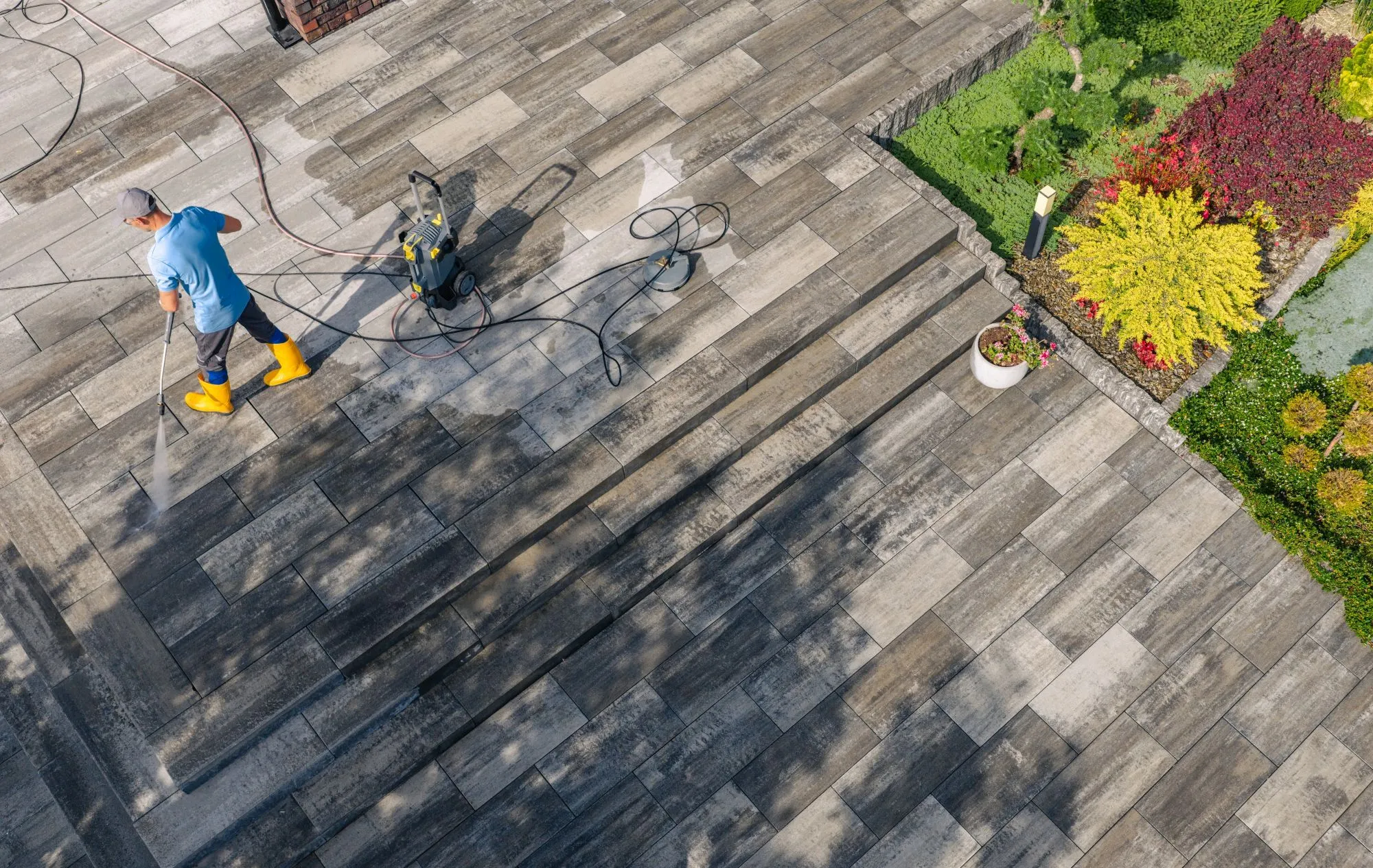
Pressure washing can remove buildup effectively when performed carefully, but excessive pressure may damage joint materials, disturb polymeric sand, or accelerate surface wear around paving stones and decorative finishes.
Sealing may help reduce moisture absorption on certain materials, but sealing alone does not eliminate moss growth when drainage problems, shade concentration, or standing water remain unresolved. Sealing recommendations depend on the material type, surface finish, and overall drainage performance of the installation.
When Persistent Moss Signals a Larger Hardscaping Issue
Recurring moss or algae growth in the same location often indicates an underlying moisture management problem rather than a surface-cleaning issue alone.
Persistent buildup near retaining walls, patio edges, stair transitions, or drainage zones may indicate grading inconsistencies, runoff concentration, drainage blockage, or subsurface water retention beneath the hardscape system.
Repeated joint erosion, unstable paving stones, recurring standing water, or surfaces that remain damp long after rainfall usually indicate larger drainage limitations that require structural evaluation rather than repeated cleaning alone.
Homeowners should consider professional evaluation when moss returns quickly after cleaning, drainage remains inconsistent across multiple seasons, or surface movement begins appearing alongside recurring moisture buildup.
Vanskyline Construction designs and installs hardscaping systems throughout Vancouver with drainage integration, grading control, paving stability, and long-term surface performance planned around the Lower Mainland’s wet coastal climate.