Seasonal maintenance helps protect patios, paving stones, retaining walls, and outdoor living features from moisture-related wear throughout the year. Vancouver’s climate brings long periods of rainfall, surface saturation, organic buildup, and freeze-thaw exposure. These conditions gradually affect hardscape stability when drainage and surface conditions are ignored. Repeated wet-dry cycles also affect joint stability, base compaction, and water movement beneath hardscape systems over time.
VanSkyline Construction works with homeowners across Vancouver on hardscaping projects designed for long-term performance in wet coastal conditions. Seasonal maintenance helps preserve drainage performance and structural stability throughout the year.
Why Vancouver’s Climate Requires Ongoing Hardscape Care
Hardscape systems in Vancouver remain exposed to moisture for much of the year. Rainfall saturation affects joint stability, soil movement, drainage performance, and organic buildup around surfaces and retaining structures.
Vancouver’s climate creates repeated wet-dry cycles instead of prolonged freezing conditions. Those cycles gradually affect surface alignment and water movement beneath hardscape systems. Moss growth, drainage blockage, edge shifting, and joint erosion often develop slowly over time rather than during one major weather event.
Paving stones, retaining wall backfill zones, and poorly drained patio bases usually show saturation-related movement first because those areas hold moisture longer beneath the surface.
Tree coverage, shaded yards, slope conditions, and runoff concentration also affect how quickly maintenance issues appear. Properties surrounded by mature landscaping or limited sunlight usually retain moisture longer. That increases organic buildup around paving stones, retaining walls, and patio edges.
Organic buildup may begin as cosmetic discoloration. Over time, it can trap moisture against joints, drainage zones, and retaining systems.
Concrete pavers, natural stone, retaining systems, and outdoor living structures also require different inspection frequency depending on material porosity, drainage exposure, and surrounding site conditions.
Spring Maintenance After Winter Rainfall
Spring inspections help identify movement, drainage restriction, and surface wear that developed during the wettest part of the year. Small alignment or drainage problems usually become easier to spot once rainfall slows and surfaces begin drying more consistently.
Inspecting for Shifting or Settling
Inspect paving stones, patios, and retaining wall sections for movement after prolonged rainfall seasons. Minor settling can occur naturally over time. Visible separation, uneven transitions, edge displacement, or recurring low spots often indicate base movement or drainage pressure beneath the surface.
Water infiltration, inadequate compaction, soil movement, and restricted drainage commonly cause recurring movement in Vancouver’s wet conditions.
Inspect steps, coping edges, and transition zones carefully because movement often appears first where elevation changes or structural pressure shifts occur.
Inspect retaining walls for leaning sections, separation between blocks, cracking, or soil movement near the top of the wall. Water retention behind retaining systems gradually increases hydrostatic pressure when drainage becomes restricted.
Minor seasonal variation may occur naturally in some installations. Recurring displacement, unstable walking surfaces, widening separation, or repeated low spots usually indicate a larger structural concern beneath the hardscape system.
Clearing Drainage Paths Around Hardscaping
Keep drainage systems around patios, walkways, retaining walls, and outdoor living spaces clear entering spring. Organic debris, sediment buildup, and compacted material reduce water movement and increase standing moisture near hardscape surfaces.
Inspect surface drains, channel drains, retaining wall weep zones, perimeter runoff exits, gravel drainage areas, and downspout discharge transitions for blockage. Trapped water near hardscaping gradually contributes to hydrostatic pressure, erosion, and reduced base stability beneath the surface.
Properties with sloped yards or heavy tree coverage usually require more frequent drainage inspections because runoff and organic accumulation increase faster throughout Vancouver’s rainy seasons.
Summer Maintenance to Preserve Surface Stability
Summer conditions create the best opportunity to evaluate surface stability, joint performance, and long-term wear patterns while surfaces remain relatively dry.
Monitoring Joint Sand and Surface Wear
Joint sand between paving stones gradually shifts from rainfall movement, surface washing, seasonal expansion, and foot traffic. Reduced joint material allows more surface movement and increases organic buildup between pavers.
Maintenance expectations vary depending on whether the installation uses traditional joint sand or polymeric sand. Polymeric materials often resist washout differently, while traditional sand usually requires more frequent replenishment.
Keep joint lines evenly filled and stable across the surface. Repeated sand loss in the same location often indicates drainage concentration, slope issues, or localized movement beneath the base layer.
Minor isolated sand loss may remain manageable through routine maintenance. Recurring washout, widespread instability, or repeated separation usually indicates a larger drainage or structural issue that requires professional evaluation.
Inspect high-traffic zones, outdoor kitchens, seating areas, and transition points regularly because repeated movement affects those areas faster than surrounding surfaces.
Preventing Heat and UV Surface Degradation
Extended summer sun exposure gradually affects certain hardscape materials, sealers, polymeric sand performance, and surface colouring. South-facing patios and exposed outdoor living areas usually experience more UV-related wear than shaded sections of the property.
UV exposure can contribute to fading, drying, sealer breakdown, or surface brittleness depending on the material and finish used throughout the installation.
Not every hardscape system requires sealing. Sealing recommendations depend on the material type, finish, installation method, and long-term maintenance goals for the space.
Inspect wood-accent outdoor living structures for moisture retention points, fastener movement, and surface deterioration. Alternating sun exposure and rainfall often accelerate wear around those components.
Fall Preparation Before Heavy Rain Returns
Fall maintenance focuses on preparing drainage systems and surface conditions before Vancouver’s heaviest rainfall periods return.
Managing Leaves and Organic Debris
Do not allow leaves, needles, soil, or organic debris to remain trapped against paving stones, retaining walls, stairs, or drainage channels for extended periods. Moisture retention increases when debris accumulates repeatedly in shaded or low-flow areas.
Organic buildup also contributes to staining, joint deterioration, and surface discoloration over time. Accumulated debris can redirect water flow, trap moisture against joints, and slow drainage movement around retaining systems and paved surfaces.
Properties with large trees or dense surrounding landscaping often require more frequent seasonal clearing throughout fall.
Pay close attention to retaining wall drainage exits and patio perimeter edges. Water restriction near structural hardscaping gradually increases pressure behind the system.
Ensuring Drainage Paths Remain Open
Verify drainage performance before prolonged rainfall returns. Water should move consistently away from patios, retaining walls, stairs, and paved surfaces without pooling or slow drainage patterns developing.
Keep downspout discharge areas, perimeter drains, channel drains, gravel drainage zones, and slope transitions unobstructed entering winter. Proper drainage allows water to clear relatively quickly after rainfall instead of leaving prolonged saturation near hardscape surfaces.
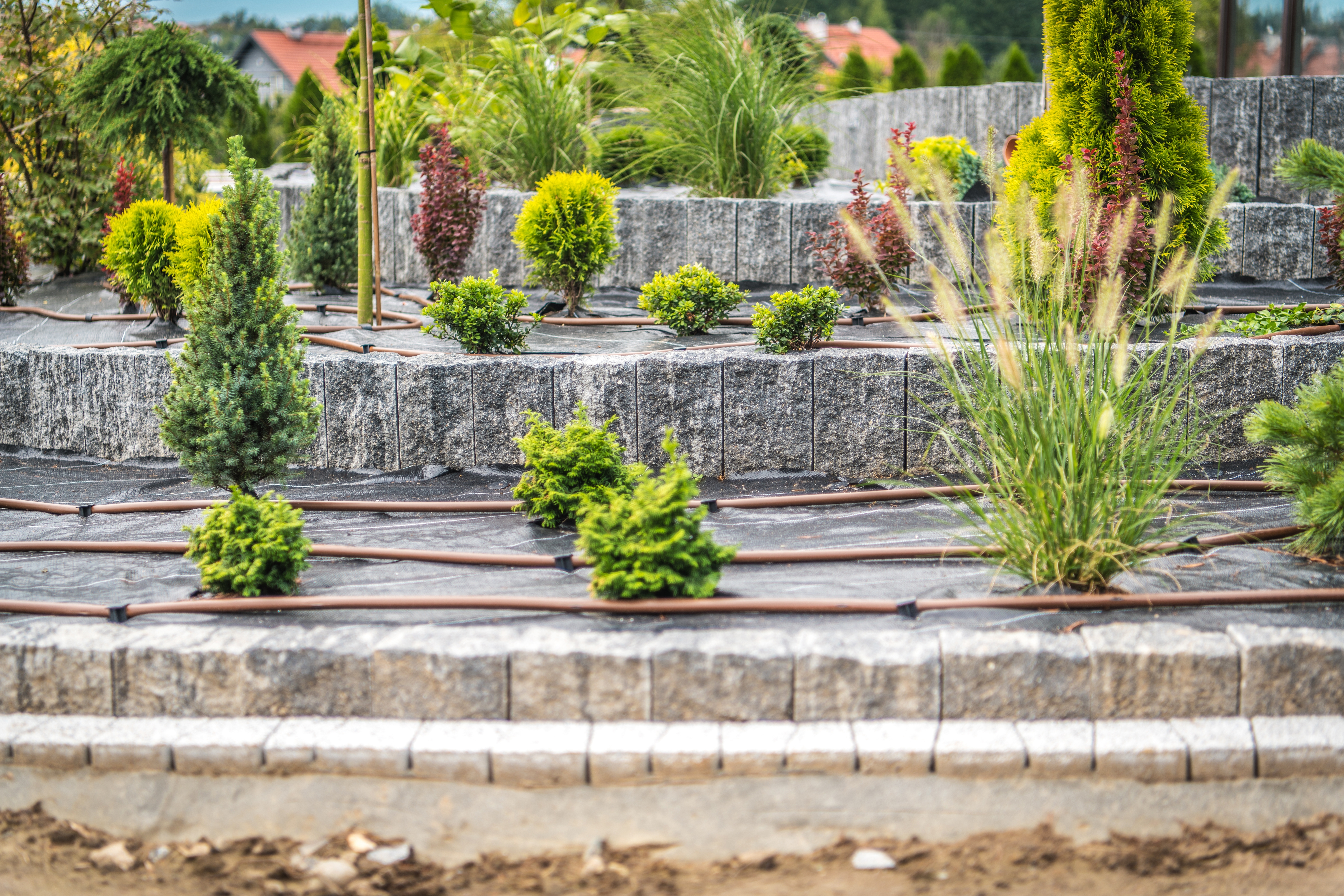
Inspect properties with retaining walls or tiered elevation changes carefully because runoff concentration often develops gradually during Vancouver’s prolonged wet seasons.
Extended atmospheric river conditions throughout the Lower Mainland can also expose drainage limitations that may not appear during standard rainfall periods.
Winter Considerations for Hardscape Surfaces
Winter hardscape maintenance in Vancouver focuses more on moisture control than heavy snow accumulation. Repeated rainfall saturation, standing water, and occasional freeze-thaw cycles create the primary seasonal pressure on outdoor surfaces.
Do not allow water to remain trapped against retaining walls, patio edges, or paving stone joints for extended periods. Saturated areas that repeatedly freeze and thaw gradually contribute to joint widening, paver edge movement, and surface displacement over time.
Use de-icing products carefully around paving stones and concrete surfaces. Repeated use of rock salt, calcium chloride blends, or aggressive chemical de-icers gradually accelerates surface wear and affects joint stability.
Avoid aggressive snow-clearing methods around paving stones or decorative concrete finishes. Metal shovels and rigid scraping tools increase the likelihood of chipped edges, scratched surfaces, and premature wear.
Inspect outdoor kitchens, covered patio structures, fire features, and integrated lighting systems periodically during winter. Confirm drainage and moisture are not collecting around electrical, structural, or finishing components.
When Seasonal Maintenance Reveals Larger Structural Issues
Seasonal inspections sometimes expose problems that extend beyond routine maintenance. Repeated settling, recurring standing water, widening separation between pavers, retaining wall movement, or consistent drainage failure often indicate deeper structural concerns beneath the surface.
Maintenance adjustments alone usually do not resolve problems caused by inadequate base preparation, improper grading, undersized drainage systems, restricted runoff control, soil movement, or long-term water retention beneath hardscaping systems.
Subsurface moisture retention gradually affects compaction, erosion resistance, frost movement, and hydrostatic pressure beneath retaining walls or paving systems. Those issues can develop before major visible movement appears on the surface.
Homeowners should contact a contractor when movement continues returning after correction, retaining walls begin leaning, drainage remains inconsistent across multiple seasons, or surface separation increases noticeably over time.
Properties built on slopes or exposed to concentrated runoff usually require more detailed evaluation. Water movement beneath the hardscape system can affect long-term structural stability gradually rather than suddenly.
Early-stage structural concerns may continue progressing beneath the surface even when patios or retaining walls still appear mostly level from above.
Protecting Patios, Retaining Walls, and Outdoor Living Features Long-Term
Long-term hardscape performance depends on consistent drainage management, seasonal inspection, and early correction of small surface changes before they expand into structural repairs.
Moisture-related wear in Vancouver often develops incrementally, especially around retaining systems, paving stone installations, and integrated outdoor living areas.
Patio edges, stair transitions, coping sections, retaining wall alignment, and perimeter drainage zones often reveal early signs of movement before larger structural problems develop elsewhere across the property.
Properly built hardscaping depends on grading, compaction, base preparation, drainage integration, and material selection working together as one complete system. Ongoing maintenance helps preserve those systems by reducing water accumulation, surface movement, and preventable material deterioration over time.
VanSkyline Construction provides hardscaping, retaining wall construction, paving stone installation, and custom patio construction across Vancouver. Their projects are designed around long-term drainage performance and seasonal environmental exposure common throughout the Lower Mainland.