What to build first in a backyard renovation depends on which features affect drainage, grading, access, utilities, and structural support. While patios, outdoor kitchens, pools, and landscaping often appear to be separate projects, they frequently depend on work completed earlier in the construction process. Vanskyline Construction helps homeowners sequence backyard renovations to avoid unnecessary demolition, utility relocation, drainage problems, and expensive rework.
Why Backyard Renovation Order Matters
Backyard renovation order matters because many outdoor features physically depend on the work completed before them. Installing hardscape or finishing features too early can force contractors to remove completed work to access utilities, adjust grading, or build structural elements.
The most expensive mistakes typically occur when homeowners treat drainage, retaining walls, excavation, or utility planning as separate decisions rather than foundational parts of the overall backyard design. Proper sequencing reduces duplicated labour, equipment access problems, and construction delays. Common sequencing mistakes include removing completed patios to install utilities, rebuilding finished landscaping to correct drainage problems, or demolishing hardscape to accommodate late structural changes.
Not every backyard feature requires the same level of sequencing control. Structural, utility, and access-dependent features generally require early construction, while many decorative and finishing elements can be phased in later without significant disruption.
Start With Site Conditions, Drainage, and Grading
Site conditions determine what can be built safely and what preparation work must occur before construction begins. Homeowners should resolve drainage and grading issues before installing permanent backyard structures.
Water Flow and Low Spots
Contractors should evaluate existing drainage patterns before installing patios, pools, outdoor kitchens, retaining walls, or landscape features. Areas that collect water, experience erosion, or direct runoff toward the home often require grading corrections or drainage improvements before construction begins.
Common drainage solutions include grading corrections, swales, catch basins, French drains, and subsurface drainage systems, depending on site conditions. Homeowners should correct persistent standing water, erosion, and runoff toward structures before beginning construction.
Installing hardscape before addressing water movement can trap runoff, create settlement problems, and increase the risk of foundation moisture issues. Drainage corrections completed early usually cost far less than retrofitting drainage after construction.
Slopes, Soil Movement, and Retaining Needs
Sloped properties and unstable soil conditions often determine the entire construction sequence. Grade changes, erosion concerns, settlement-prone fill, steep slopes, or unstable soils may require retaining walls, engineered fill, or structural reinforcement before contractors can install other backyard features.
Because retaining systems frequently support patios, pools, outdoor living areas, and finished landscaping, identifying these requirements early prevents structural conflicts and costly reconstruction later. Wall height, loading conditions, municipal regulations, and site complexity may require engineering review before construction begins.
Build Structural and Access-Dependent Features Early
Features that require excavation, structural support, or heavy equipment access should generally be constructed before finished surfaces are installed. Once access routes become restricted, installation costs often increase significantly.
Retaining Walls and Level Areas
Retaining walls typically establish the usable layout of the backyard by creating level building areas and controlling grade transitions. Because many outdoor features depend on stable elevations, contractors often install retaining walls before patios, pools, kitchens, or finished landscaping.
Homeowners planning elevation changes or sloped yard improvements should address retaining walls before proceeding with additional backyard construction.
Pools, Hot Tubs, and Heavy Equipment Access
Pools, hot tubs, and other large installations frequently require excavation equipment, delivery access, and substantial site preparation. Installing patios, pavers, fencing, or landscaping before major construction can significantly increase project difficulty and cost.
Access constraints such as narrow side yards, existing structures, fences, overhead utilities, or steep grades may limit equipment options and alter the construction sequence. Some projects require crane lifts, specialized equipment, or temporary removal of completed features.
Contractors therefore often install fibreglass pools and complete hot tub installation before finishing surrounding outdoor living spaces.
 Plan Utilities Before Hardscaping Is Installed
Contractors should plan underground services before installing permanent surfaces. Installing utilities after hardscape completion often forces crews to demolish and rebuild finished areas.
Gas, Electrical, Plumbing, and Drainage Lines
Contractors should install gas lines, electrical conduits, plumbing connections, irrigation systems, drainage infrastructure, and low-voltage wiring before building patios, paving stones, porcelain surfaces, or finished landscaping.
Failing to plan utility infrastructure early may require excavation through completed hardscape, increasing both cost and project disruption. Installing additional conduit, spare electrical capacity, or future utility rough-ins during initial construction can significantly reduce the cost of future backyard additions.
Outdoor Kitchens, Fire Pits, Lighting, and Hot Tubs
Outdoor living features frequently require multiple utility services operating together. Gas appliances, electrical equipment, lighting systems, drainage components, and water connections should be coordinated before construction begins.
Features such as custom outdoor kitchens and fire pit construction often depend on utility planning completed much earlier in the project sequence. Homeowners should consider future additions during initial excavation and utility installation, even if they plan to build those features later.
Install Patios, Pavers, and Outdoor Living Surfaces
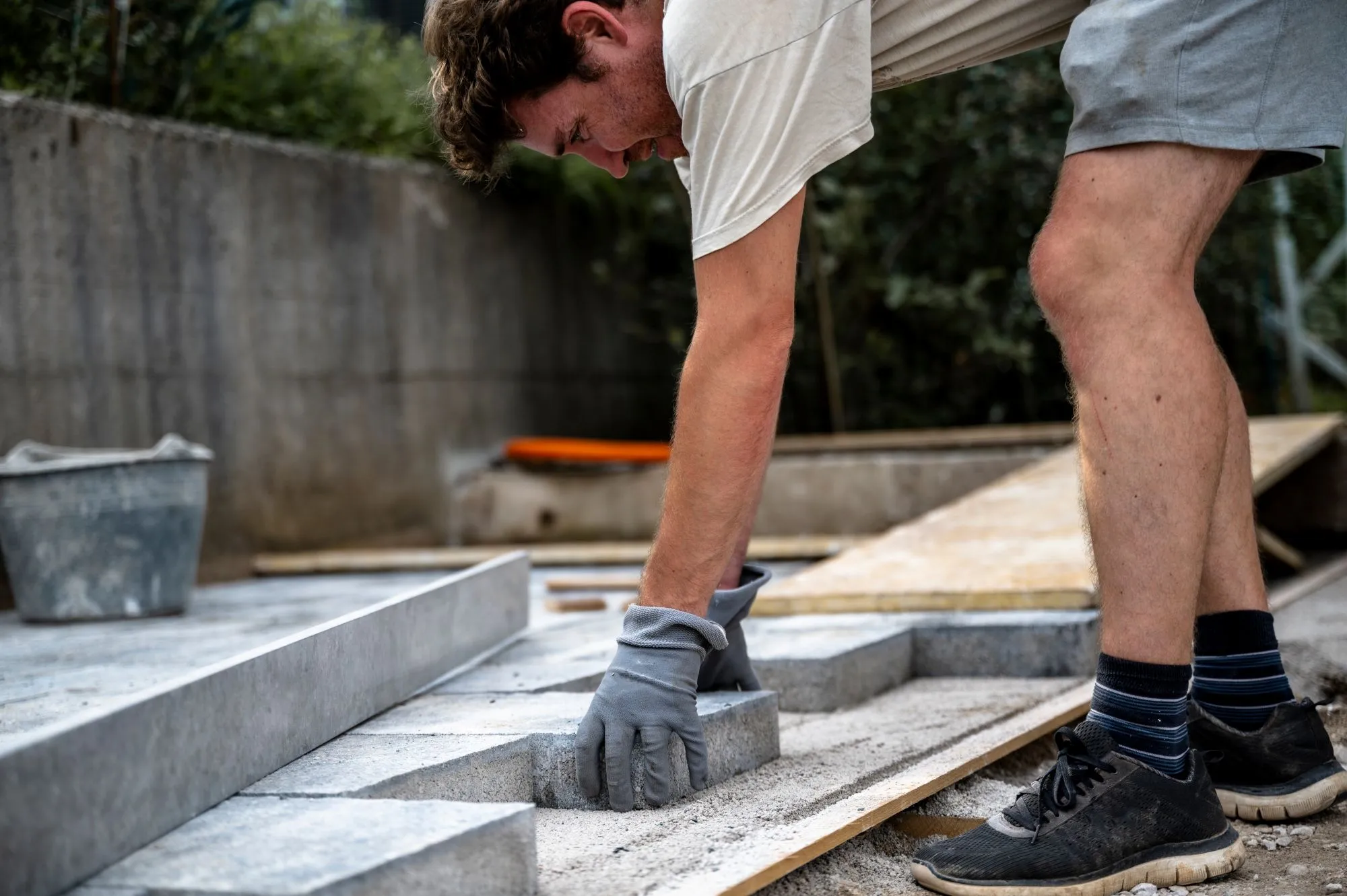
Once contractors complete drainage, grading, structural features, excavation, and utility work, they can install finished outdoor surfaces. This stage typically includes patios, paving stones, porcelain tile systems, walkways, seating areas, and other permanent hardscape features.
Because these installations establish final elevations, drainage slopes, access routes, and finished surfaces, contractors should install them after completing heavy construction work. Homeowners planning custom patios, paving stones, porcelain tile installation, or larger hardscaping projects typically benefit from completing all structural and utility work first.
Certain situations may justify delaying finished surfaces, including phased backyard renovations, planned future additions, seasonal construction limitations, or projects where portions of the property will remain under development.
Add Finishing Features After the Core Build
Finishing features usually provide the greatest flexibility during backyard construction because they rarely affect structural construction, grading, or major utility infrastructure. Homeowners can often delay these components without creating significant rework.
Examples of features that can safely be installed later include:
- Decorative landscape elements
- Artificial turf
- Smaller water features
- Planting beds
- Accent lighting
- Decorative stone
- Furnishings and accessories
Larger water features, landscape structures, and complex lighting systems still require early planning, even when installation occurs later. Many homeowners choose to phase features such as artificial turf installation or water features after completing primary construction work.
Backyard Renovation Build Order
While every property presents unique conditions, most backyard renovations follow a similar construction sequence to minimize conflicts and avoid unnecessary reconstruction.
| Construction Stage | Typical Work |
|---|---|
| Site Preparation | Surveying, grading assessment, drainage planning |
| Structural Work | Excavation, retaining walls, grade changes |
| Major Installations | Pools, hot tubs, large structures |
| Utility Infrastructure | Gas, electrical, plumbing, drainage |
| Hardscape Installation | Patios, paving stones, porcelain tile, walkways |
| Secondary Features | Outdoor kitchens, fire pits, lighting |
| Finishing Elements | Artificial turf, water features, landscaping |
Project phasing, equipment access limitations, site conditions, and future expansion plans can alter this sequence. Utility-dependent features generally require earlier coordination, while decorative and landscape features often provide greater flexibility.
Following the proper construction sequence helps reduce equipment access issues, utility conflicts, drainage problems, and unnecessary demolition costs throughout the project.
Planning the Right Backyard Build Sequence With Vanskyline Construction
The right backyard construction sequence depends on the property’s existing conditions, elevation changes, utility requirements, structural features, and long-term goals for the space. Building features in the wrong order often increases costs more than the features themselves.
Homeowners should identify future additions before grading, structural construction, and utility installation begin, even if they plan to install those features later. Early planning often provides greater flexibility while reducing future construction costs.
For homeowners planning complex outdoor renovations, Vanskyline Construction can help determine the appropriate build sequence, coordinate structural and utility requirements, and develop a construction plan that minimizes rework while supporting future additions.